info@ethicallyspeaking.net

The Great Chain of Being, Color, and Its Upper Hierarchy
- Home
- Uncategorized
- The Great Chain of Being, Color, and Its Upper Hierarchy
17
Jul
0
The Great Chain of Being, Color, and Its Upper Hierarchy

So, you may be wondering, “What is the Great Chain of Being and how does its upper hierarchy relate back to you and your color identity?” This is the million-dollar question and hopefully I can be the one to answer it. In this blog, I want to focus on the color of the top tier aspects of the Great Chain of Being: God and human royalty.
The Great Chain of Being derived in ancient times as a concept taught by Plato, Aristotle, Plotinus, and Proclus. During the Middle Ages, the concept further solidified itself as the way in which the world ran. Everyone stayed in their place, and no one stepped out of it.
People remained in their own lane, both economically and socially. Also known as Jacob’s Ladder, the Great Chain of Being was historically rooted in the Book of Genesis, Chapter 28, Verses 10-12, where Jacob saw the angels of God ascending and descending on an infinite staircase connecting heaven and earth.
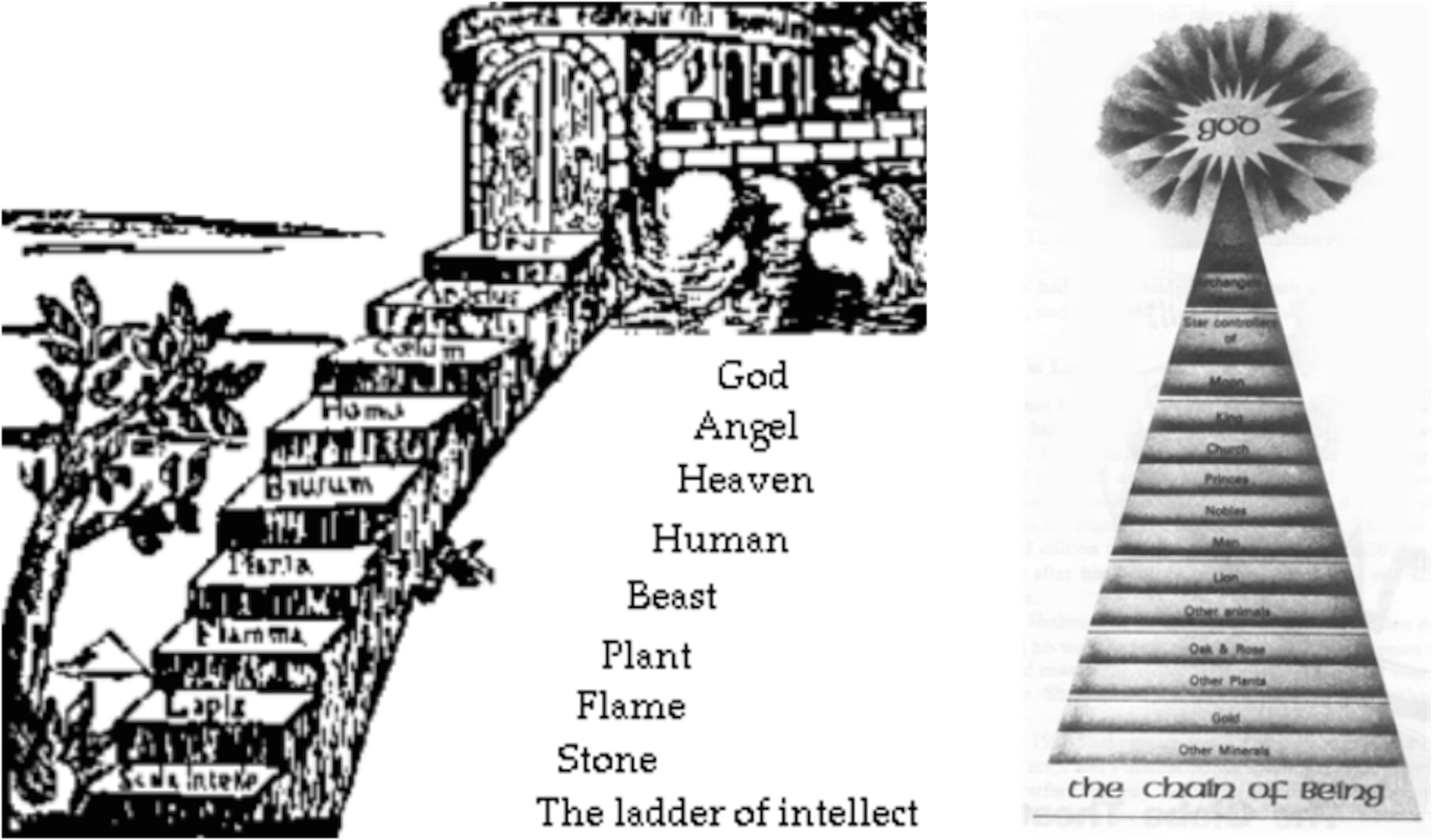
As shown in the Great Chain Image 1 and within this hierarchy of being, God was placed at the top of the chain. Angels (both unfallen and fallen) were below God, who like Him, were also spiritual beings. Beneath the Most High God and angels was the king or queen who ruled on earth. These royal figures also included princes, princesses, nobles, and other significant godlike beings. Humans known as commoners were beneath the king or queen. Unlike God and His angels, humans were considered both spirit and body. The human body was viewed as being in continuous decay. Animals, then plant life and other material substances, such as precious stones and metals, were below humans. As you can see, the order of things was linear in significance. To disrupt order would be to change the dynamics of the world.
In this writing, I would like to focus on the appearance of God the Father, Jesus Christ, and Queen Elizabeth I, who was most famously associated with the Great Chain of Being. The chain’s conceptual framework was mostly promoted under Queen Elizabeth I’s reign to strengthen her monarchial power and maintain social order.
Now, let’s discuss Queen Elizabeth I. She was the longest reigning monarch of the House of Tudor, which later became known as the Elizabethan era. During her reign in England and Ireland (1558-1603), she was viewed as God on earth. The queen represented God and she spoke for Him on earth.
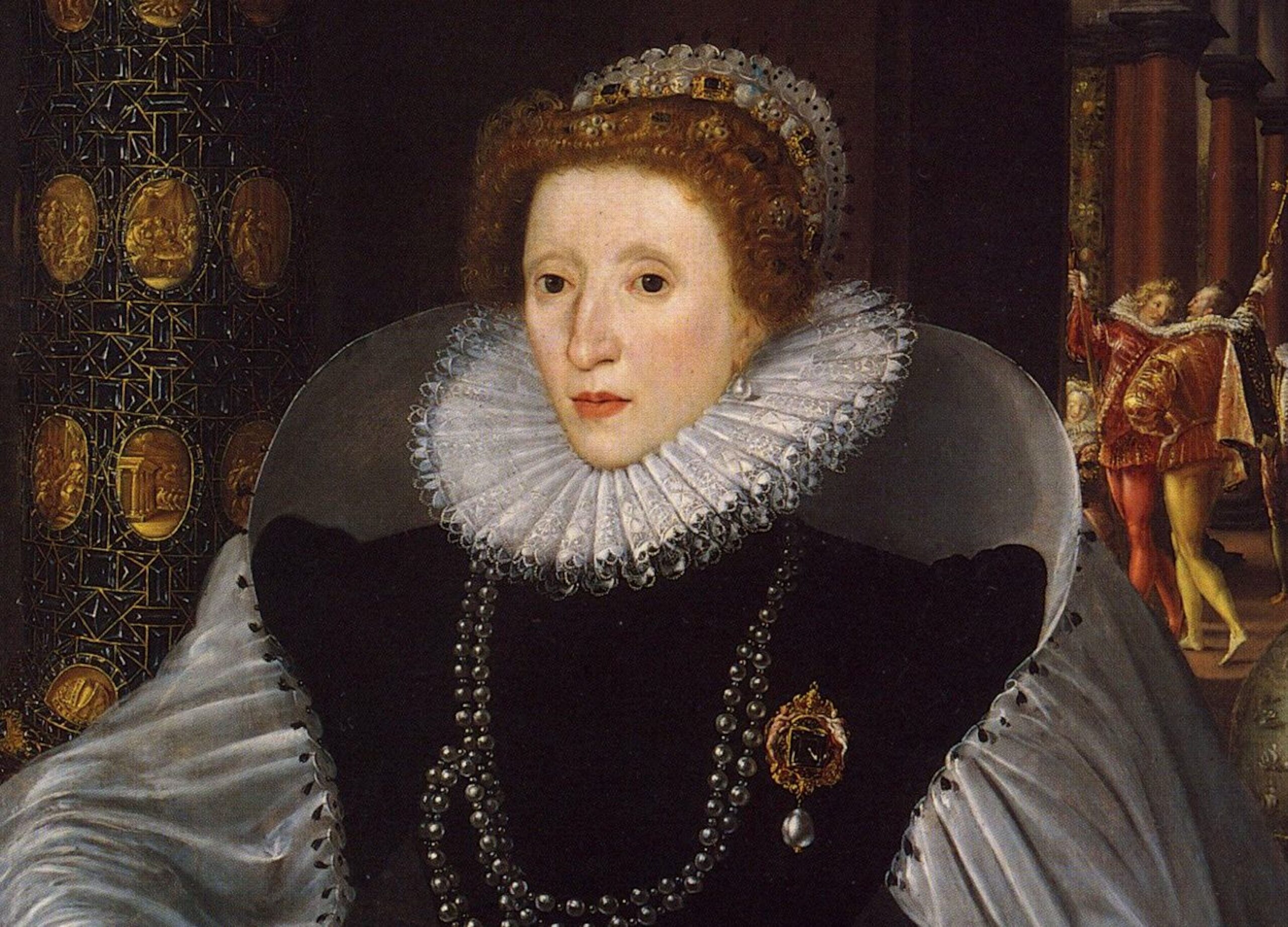
As noted by prominent witnesses during her reign, Queen Elizabeth I was described as a woman with dark complexion, which was a complete contradiction in how she was portrayed in paintings commissioned before and after her death. In fact, before the European Renaissance, blackness was inherently associated with godliness. The darker you were, the more likely you were adored and even venerated as a saintly or godly being. As noted in the book, The Calendar of State Papers and Manuscripts, Relating to English Affairs, Queen Elizabeth I’s skin was described as swarthy. As Ambassador Giovani Michelle exclaimed: “My Lady Elizabeth was born in September 1533, so she is now 23 years old. She is a young woman, whose mind is considered no less excellent than her person, although her face is comely rather than handsome, but she is tall and well formed, with a good skin, although swarthy” (1527-1533, p. 1058). If you look up the term, swarthy, you will find that it means of dark skin complexion or black in color. In another book, Beauties of English and Scottish History, Sir James Melvin further described Queen Elizabeth I as having reddish, naturally curly hair. Either way, Queen Elizabeth most likely looked more as the model in the Great Chain Image 2 than the whitewashed painting of her in the Great Chain Image 3.
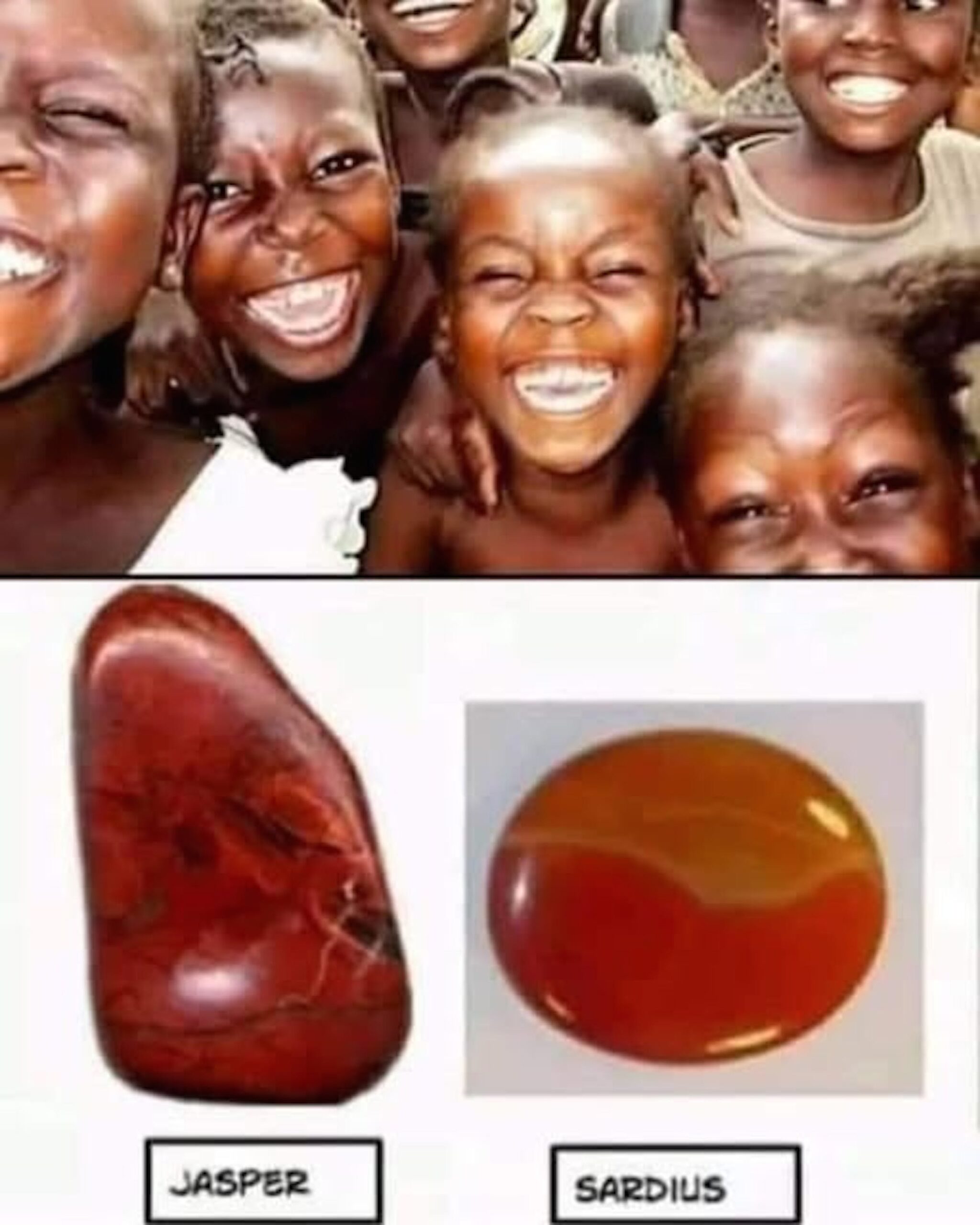
Lastly, we can now focus on the Godhead and His appearance according to biblical scriptures. As noted in scriptural narratives, both God the Father and His Son, Jesus (Yeshua in Hebrew), are the highest spiritual beings with color. The Apostle John in the Book of Revelation, Chapter 4, Verses 2-3, clearly states: “Immediately I was in the Spirit; and behold, a throne set in heaven, and One sat on the throne. And He who sat there was like a jasper and a sardius stone in appearance; and there was a rainbow around the throne, in appearance like an emerald.”
These two biblical verses show that God the Father’s appearance is similar to the image of jasper and sardius stones as depicted in the Great Chain Image 4. The Black young children in this image are the exact same color as the stones, which makes them children of God. Yeshua, the Son of God, is also described as a Man with color according to biblical scriptures. In the Book of Revelation, Chapter 1, Verses 14-15, John states that Christ’s head and hairs “were white like wool, as white as snow; and his eyes were as a flame of fire; and his feet like unto fine brass, as if they burned in a furnace; and his voice as the sound of many waters.” The depiction of Christ in the Great Chain Image 5 aligns more with how Yeshua visually looked after His resurrection than how we have been taught to believe He appeared.
As you can see, the image of God, Jesus the Christ (Yeshua), and Queen Elizabeth I, whom the Great Chain of Being was inspired by, all have color, rather than being absent of it. As a society, we have been misled to believe that color does not matter, while at the same time, using it to justify the subjugation of people with color. We can no longer fall victim to centuries of misinformation about our identity from those who wish to control our destiny.
Fortunately for us, we now have access to the correct information to contradict the lies that once dominated and controlled our human existence.
For we must never forget that once you know the truth about who you are and the God you serve, you will be free to live life more abundantly.
Ethically speaking,
Obiora N. Anekwe
Categorised in: Uncategorized